Genesis Panthesis The Sci-Phi Sector
► Science ► Physics ► Chemistry ► Organic Chemistry ► Organic Reactions ► Alkene & Alkyne Reactions

Markovnikov’s Rule


Introduction

Markovnikov’s Rule has to do with alkene and alkyne additions.


Markovnikov Addition

Figure 1 — propene and hydrobromic acid are combined to form 1-bromopropane and 2-bromopropane. Because more hydrogen-rich carbons will tend to grab up more hydrogens, the terminal carbon which previously had been a CH2 takes the hydrogen from the hydrobromic acid, forcing the bromide atom to bond with the secondary carbon, thus forming 2-bromopropane. A small amount of 1-bromopropane will also be produced as a minor product.

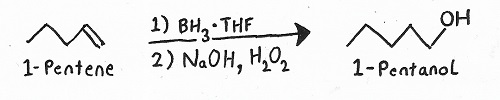
Anti-Markovnikov Addition


About GenPan
► The Official FAQ
► Contributors

Science Sections
► Science
► Physics
► Chemistry
► Biology
► Eukaryology
► Zoology
► Ichthyology
► Herpetology
► Mammalogy
► Primatology
► Anthropology

Social Media Presence
► Genesis Panthesis on Facebook
► Genesis Panthesis Instagram

Resource Links
► AAAS — American Association for the Advancement of Science
► NCBI — National Center for Biotechnology Information

Journal Links
► Nature: International Journal of Science
► PMC — PubMed Central
► PNAS — Proceedings of the National Academy of Sciences of the United States of America
► Science
► ScienceDirect

Catalogue Links
► Bone Clones
► Skulls Unlimited
► The TeacherSource
► ThermoFisher Scientific

Magazine Links
► National Geographic
► NewScientist
► Popular Science
► Scientific American

Support
► Donate $ to D. J. Scott
► Donate an Article
► Donate an Image